Introduction
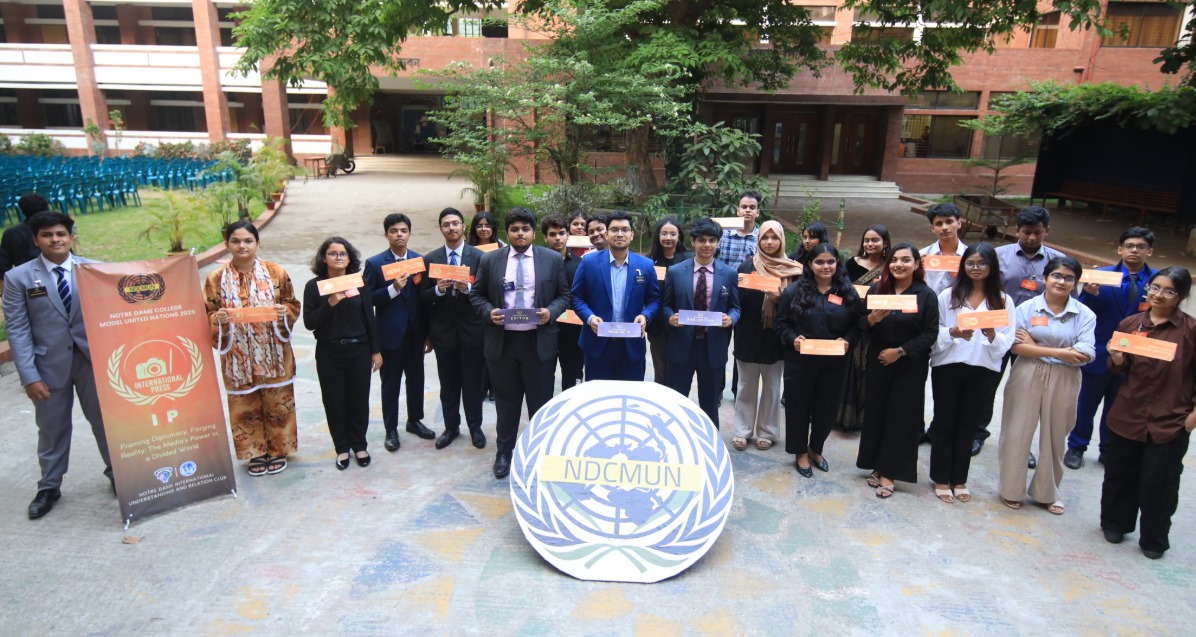
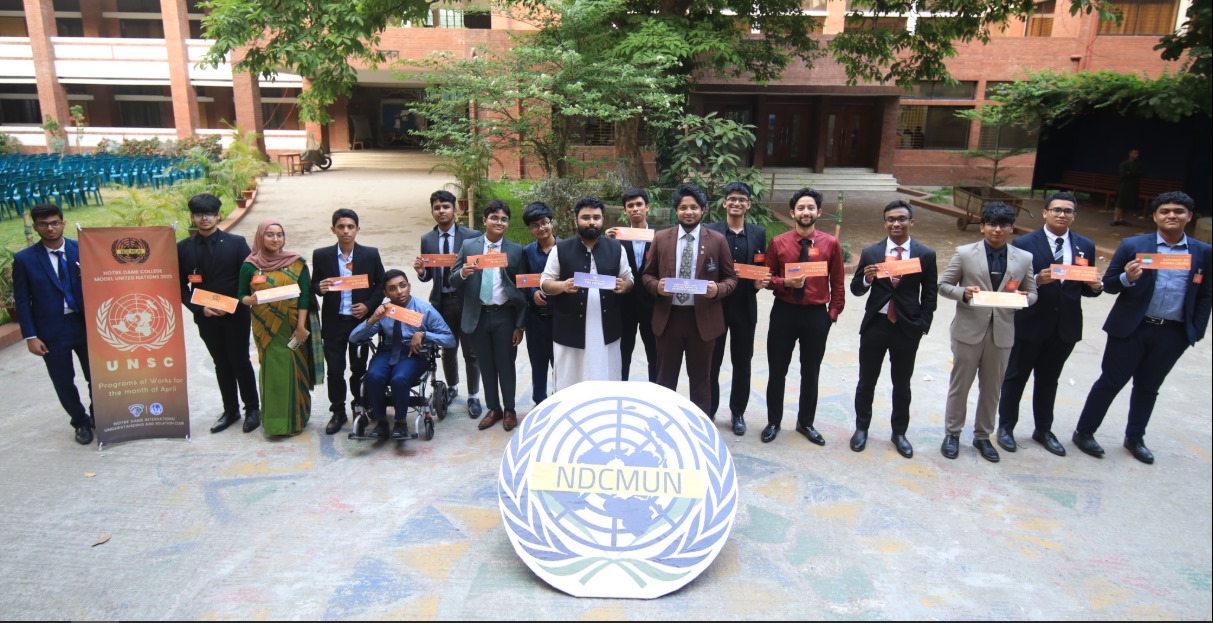
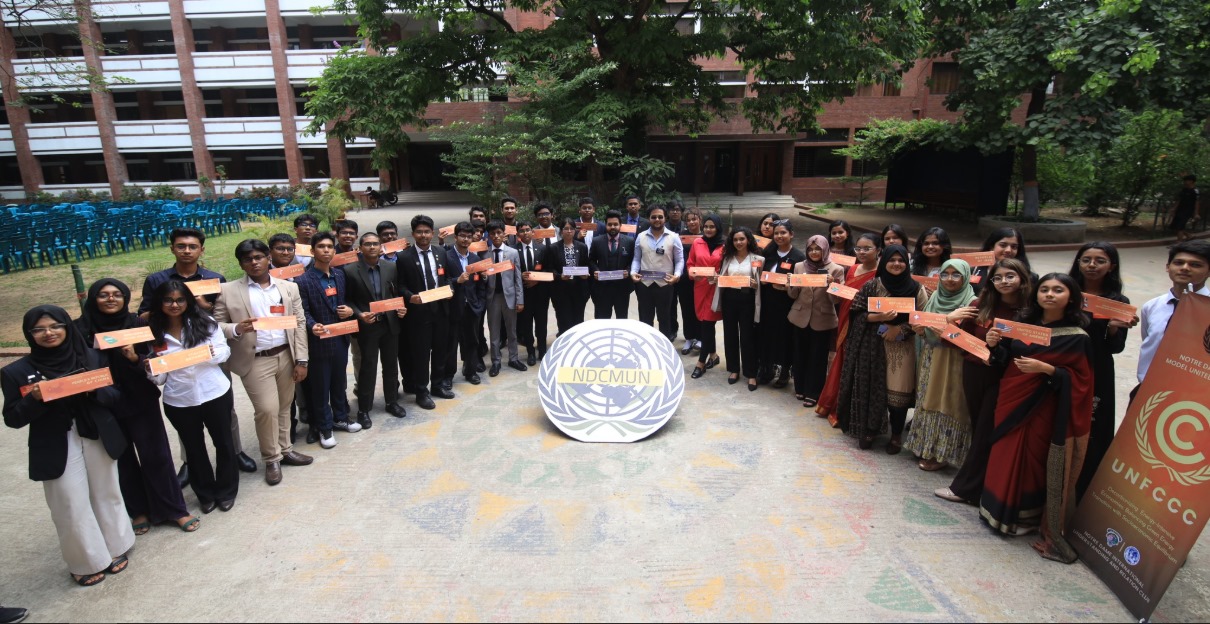
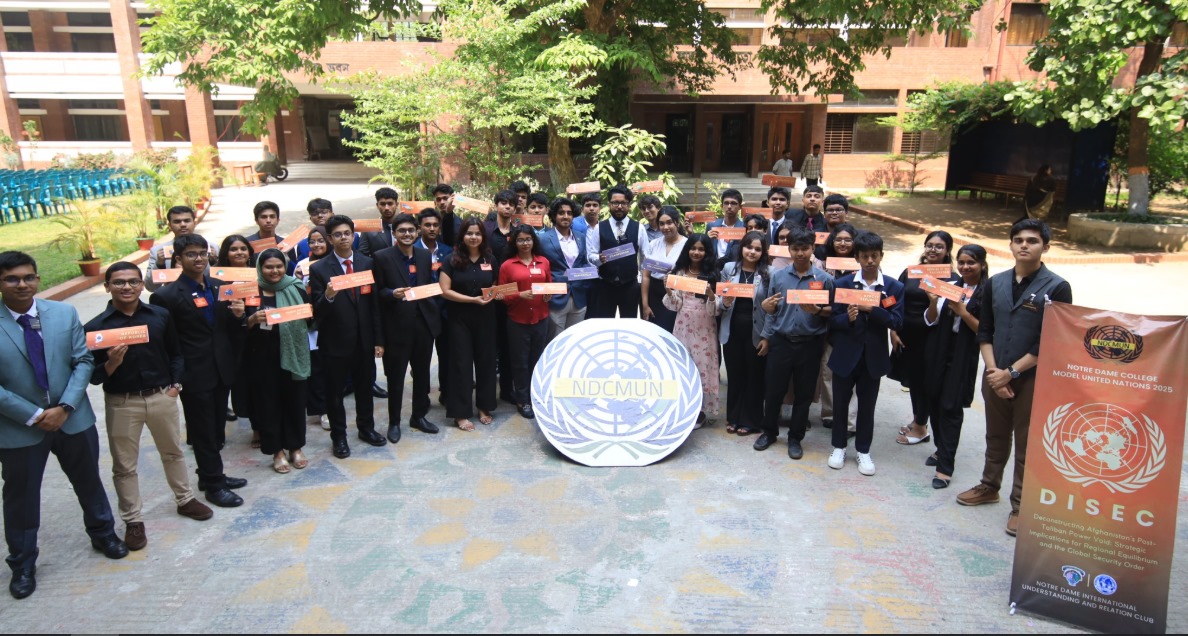
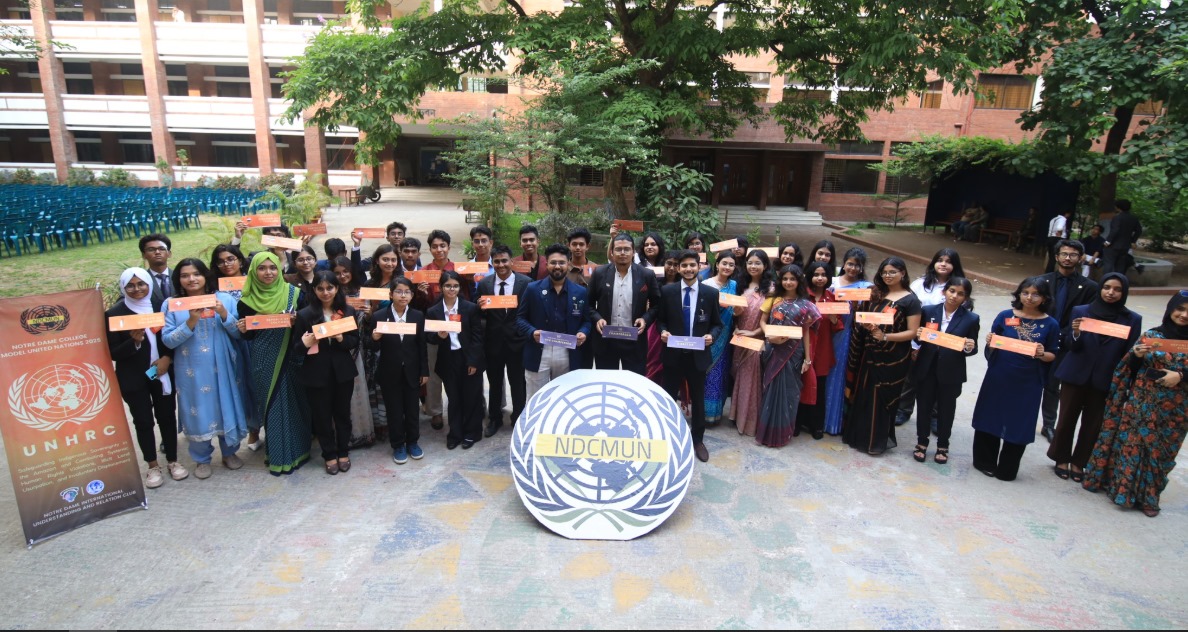
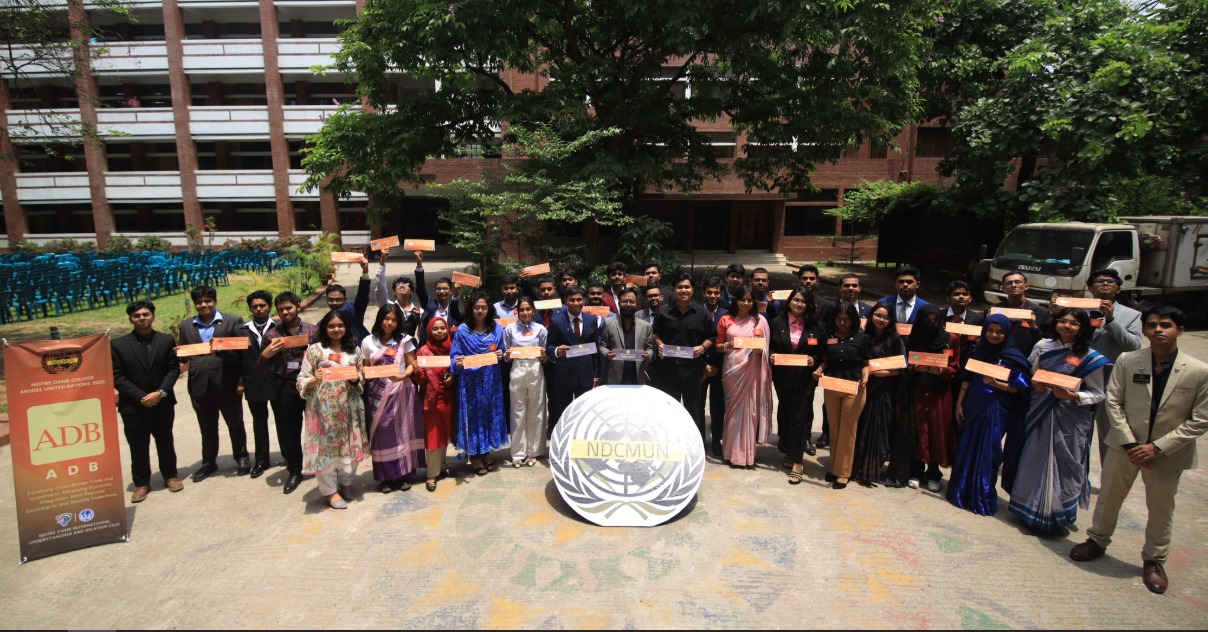
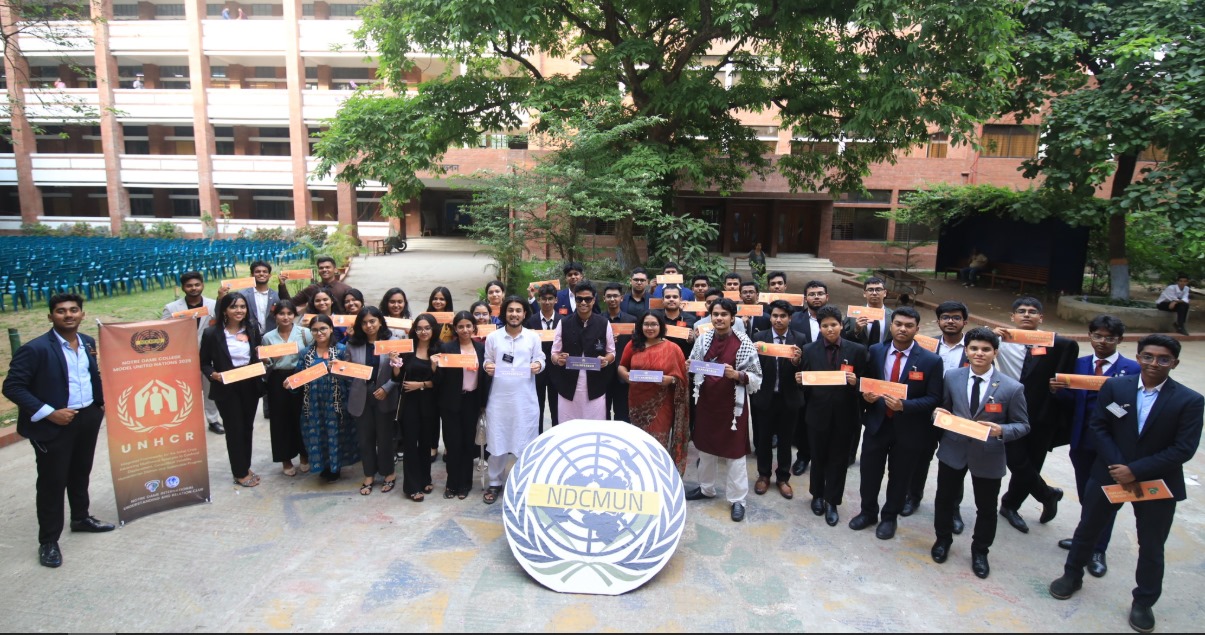
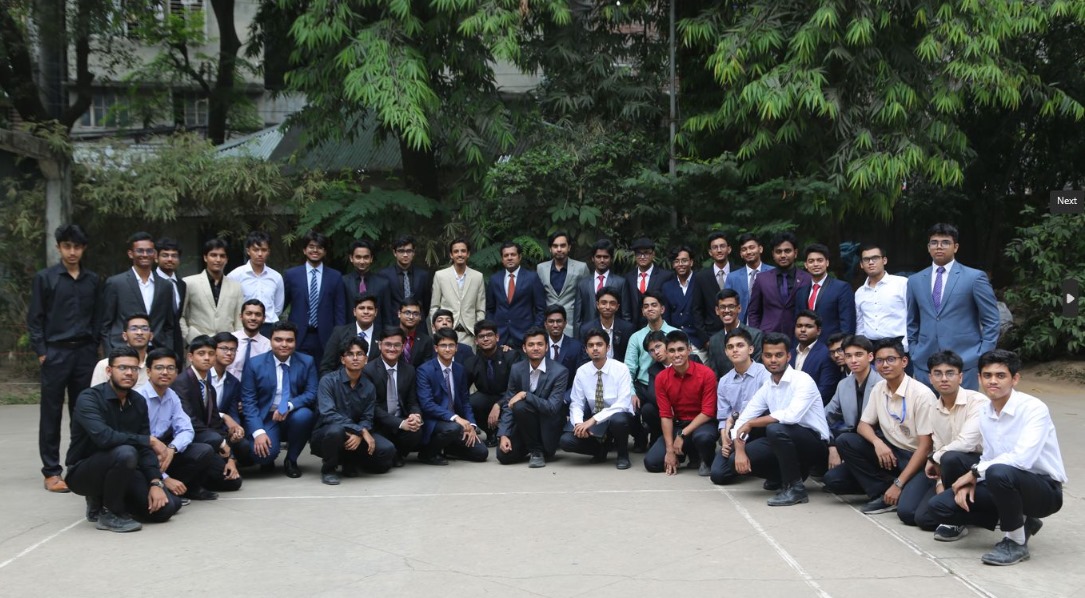
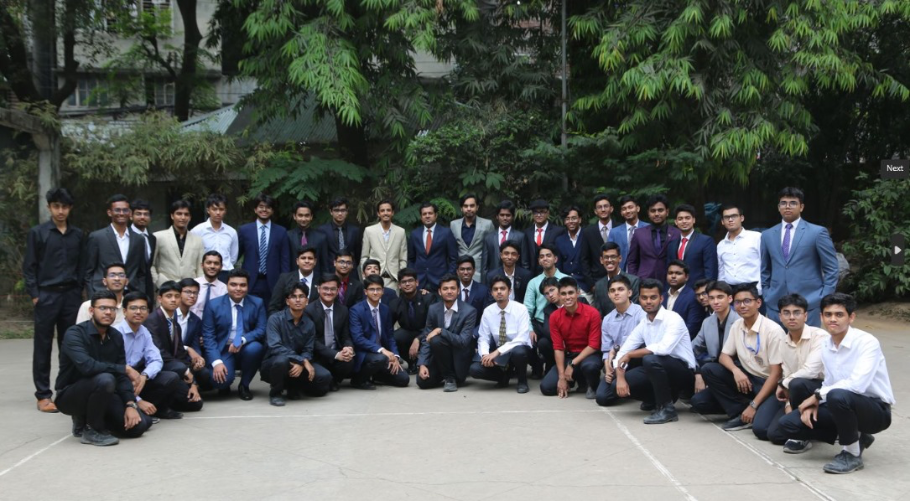
In the bustling heart of Dhaka's Motijheel area, over 360 young minds gathered at Notre Dame College campus to engage in one of Bangladesh's most anticipated student diplomatic events. The 7th edition of the Notre Dame College Model United Nations (NDCMUN 2025) concluded successfully on April 26, 2025, after three days of intense debate, negotiation, and collaboration. Operating under the compelling motto "Recalibrating Diplomacy," this year's conference brought together delegates from institutions across the capital to simulate global governance, tackle pressing international issues, and reimagine the future of diplomatic discourse. What unfolded was not merely a student conference, but a powerful demonstration of youth leadership, critical thinking, and the enduring relevance of dialogue in an increasingly fractured world.
A Grand Opening: Setting the Stage for Global Dialogue
The conference commenced on Thursday, April 25, 2025, with an opening ceremony that captured the gravitas and excitement of the days ahead. Distinguished guests graced the occasion, including Dr. Father Charles B. Gordon, CSC, Vice Chancellor of Notre Dame University Bangladesh, who served as chief guest. He was accompanied by Md. Azizur Rahman, the Moderator of the Notre Dame International Understanding and Relations Club (NDIURC), the organization behind this ambitious undertaking, and Fr. Anthony Pronoy Gomez from the Department of Economics, who hosted the proceedings.
The opening ceremony was more than mere formality; it established the philosophical foundation for the entire conference. Md. Azizur Rahman delivered a powerful message that resonated throughout the three-day event: "While competition is a part of model united nations, the true spirit lies in cooperation, respect and diplomacy." This emphasis on collaboration over competition would prove prescient as delegates navigated complex committee debates in the days to come. Dr. Father Gordon added depth to this vision, noting that "What resonates is not just what is said, but how it is understood"—a reminder that effective diplomacy requires not only eloquent speech but also empathetic listening and genuine comprehension.
The ceremony concluded with a symbolic gesture as the chief guest released balloons into the Dhaka sky, officially launching NDCMUN 2025 and sending a visual representation of hope, aspirations, and the soaring ambitions of Bangladesh's youth into the atmosphere.
The Opening Plenary: Democracy in Action
Shortly after the opening ceremony, the opening plenary began under the leadership of Plenary President Aditya Chowdhury. This session represented democracy in its purest form as representatives from the executive board of each of the eleven committees took the floor to welcome their delegates and provide brief overviews of their agendas and expectations. Each committee representative outlined the critical issues their delegates would grapple with, setting the tone for substantive debates and foreshadowing the intellectual rigor that would characterize the conference.
The opening plenary culminated with closing remarks from Secretary General Aan Nur Rahi Abir, who emphasized the evolving nature of Model United Nations as an educational platform. His words underscored NDCMUN's commitment to fostering not just debate skills, but academic rigor and genuine youth diplomacy. With the gavel strike marking the official commencement of committee sessions, NDCMUN 2025 was underway, and over 360 delegates dispersed to their respective committees to begin the work of reimagining global governance.
Tackling Global Challenges: The Committees in Action
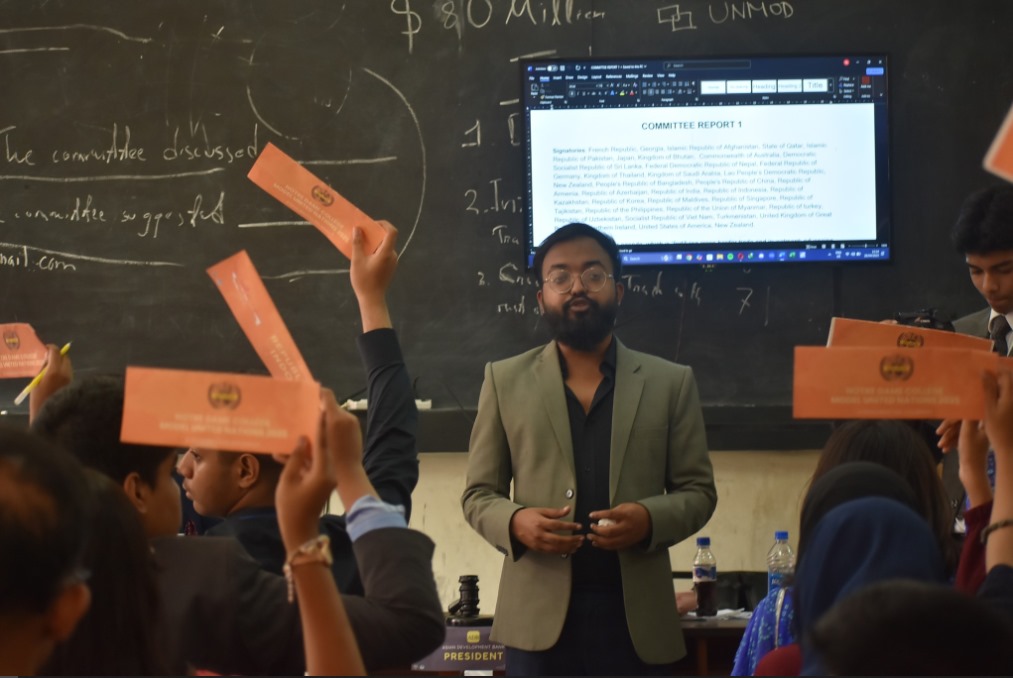
The heart of any Model United Nations conference lies in its committee sessions, and NDCMUN 2025 did not disappoint. Across eleven diverse committees, delegates engaged with some of the most pressing and contentious issues facing the international community today. The range of topics reflected the conference's commitment to addressing both historical and contemporary challenges, from regional conflicts to global environmental crises.
Delegates in the Kashmir committee wrestled with one of South Asia's most intractable conflicts, examining the fragile peace in the region and the humanitarian crisis that affects millions. The committee dealing with Bangladesh's 2007-2008 political crisis offered a historical perspective, allowing participants to simulate the complex dynamics of the Caretaker Government period and understand how past political tensions continue to shape present realities. Meanwhile, another committee focused on Bangladesh in 2025, analyzing the country's current political crossroads following significant upheaval and exploring pathways toward democratic renewal and stability.
Environmental justice took center stage in the UNFCCC committee, where debates became particularly heated when delegates confronted the uncomfortable realities of climate colonialism and the unequal burden of environmental responsibility between developed and developing nations. The moment when China's delegate accused developed nations of perpetuating "climate colonialism" exposed the deep geopolitical fault lines embedded in climate negotiations—a necessary rupture that, while uncomfortable, forced honest conversation about historical responsibility and environmental exploitation.
The Disarmament and International Security Committee (DISEC) examined Western arms proliferation and its devastating consequences, particularly focusing on the $7 billion worth of abandoned US weapons in Afghanistan that now fuel regional instability. Survey results revealed that 68% of delegates believed present UN mechanisms had "completely failed" to halt illegal arms trafficking—a sobering assessment of international governance structures. Similarly, the committee on US sanctions and international law (SPECPOL) challenged delegates to confront American sanctioning hypocrisy and the selective application of international pressure, raising fundamental questions about the credibility of unilateral actions in a supposedly multilateral world order.
What unified these diverse committee sessions was a commitment to honest, critical engagement with complex issues. Delegates were encouraged not simply to represent their assigned countries' positions, but to think deeply about systemic problems, power dynamics, and potential pathways toward more just and effective international cooperation.
The Voice of International Media
One of NDCMUN 2025's most innovative features was its integration of an international press corps, composed of student correspondents representing major global news agencies. These young journalists worked throughout the conference to capture the essence of committee debates through articles, interviews, and photography, adding an additional layer of realism to the simulation.
Correspondents from Agence France-Presse, Al Jazeera Media Network, Associated Press, BBC News, CNN, China Central Television (CCTV), Deutsche Welle, France 24, and several other international outlets produced thoughtful pieces that highlighted key debates and amplified delegate voices. Their work served multiple purposes: it provided delegates with experience in media relations and public diplomacy, offered real-time documentation of conference proceedings, and created lasting artifacts that would help convey the conference's impact to audiences beyond those who attended.
The press team's articles tackled the substantive issues debated in committees, from the Kashmir conflict to climate justice to sanctioning hypocrisy. By framing these debates within journalistic narratives, the press correspondents helped demonstrate how Model UN discussions connect to real-world policy debates and media coverage, further blurring the line between simulation and reality in productive ways.
A Dignified Conclusion: The Closing Ceremony
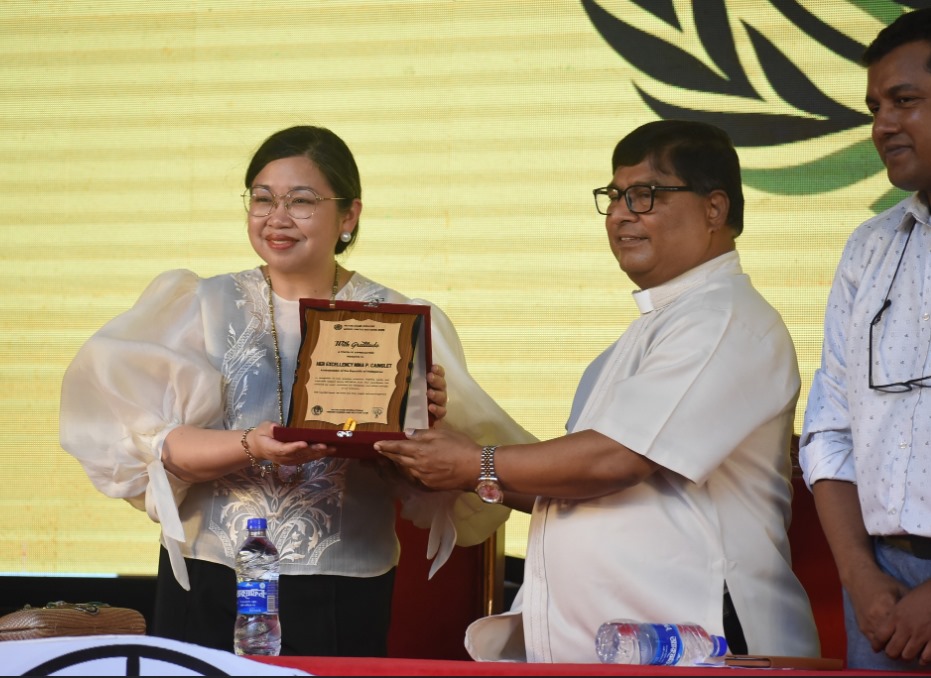
After three days of intensive debate, negotiation, and diplomatic engagement, NDCMUN 2025 drew to a close on April 26, 2025, with a ceremony befitting the significance of what had been achieved. The closing ceremony was graced by Her Excellency Nina P. Cangellett, Ambassador of the Republic of the Philippines to Bangladesh, whose presence underscored the conference's legitimacy and importance. She was joined by Dr. Fr. Hemanto Pius Rozario, CSC, Principal of Notre Dame College, and Md. Azizur Rahman, whose leadership had been instrumental in bringing the conference to fruition.
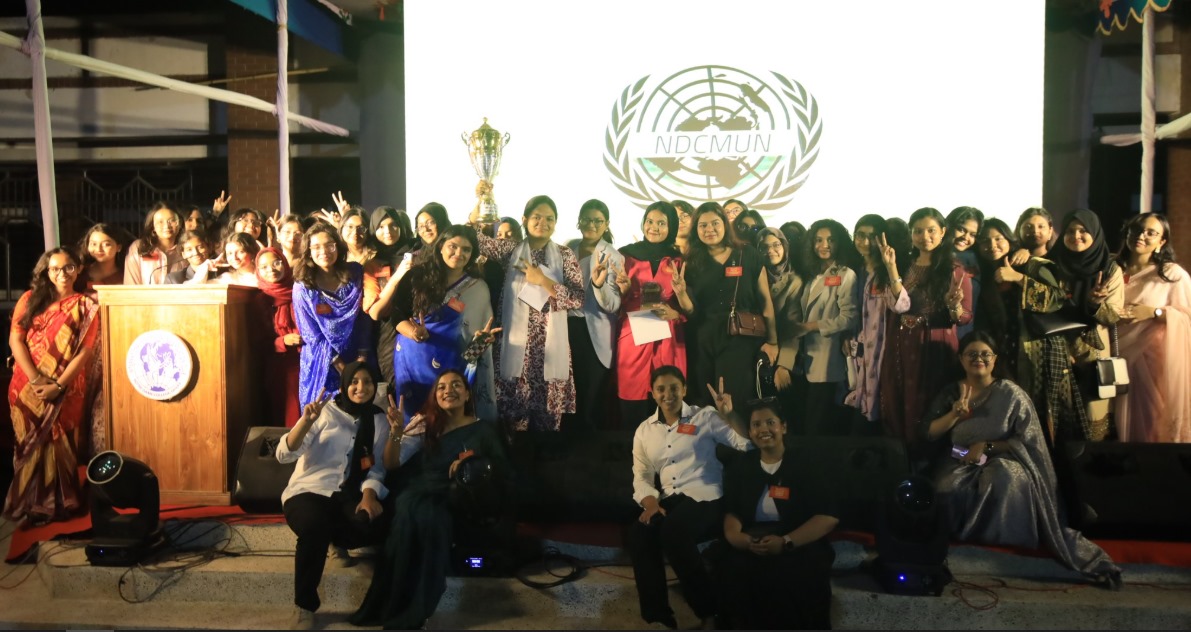
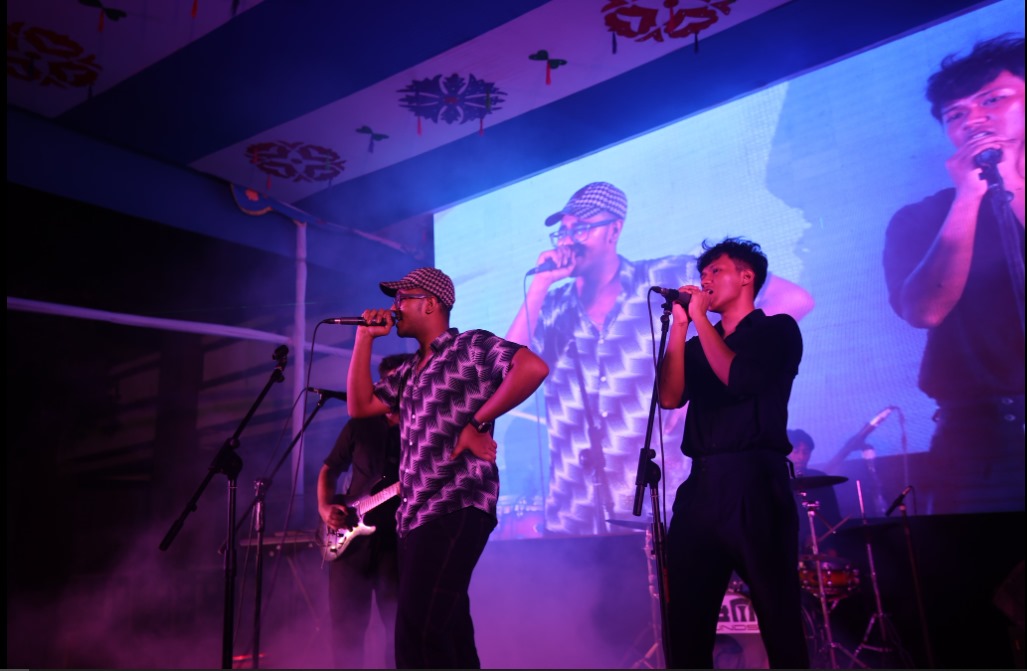
The ceremony featured reflections from executive board representatives of each committee, who shared highlights from their sessions and recognized delegates who had demonstrated exceptional diplomatic skill, research depth, and collaborative spirit. Awards were distributed to deserving participants, acknowledging their hard work and excellence. The ceremony became more euphoric with cultural performances by the Notre Dame Cultural Club and NDIURC members, celebrating not just diplomatic achievement but the vibrant culture of the Notre Dame community.
Secretary General Aan Nur Rahi Abir delivered concluding remarks that captured the essence of what NDCMUN 2025 had accomplished. He emphasized the evolving nature of Model United Nations and reiterated NDCMUN's crucial role in fostering academic rigor and youth diplomacy. With the final gavel strike, NDCMUN 2025 was officially brought to a close, fulfilling its motto of "Recalibrating Diplomacy" and, many would say, becoming a new standard in the MUN circuit for collaboration, critical thinking, and academic excellence.
Reflection and Growth: The Secretariat's Message
In a display of maturity and self-awareness that distinguished NDCMUN 2025 from many student-led conferences, the Secretariat Board issued a thoughtful message acknowledging both successes and shortcomings. While expressing heartfelt gratitude to all delegates whose passion, dedication, and presence gave life to the conference, the board candidly acknowledged that there had been imperfections. From logistical constraints to organizational challenges, the Secretariat recognized that certain aspects could have been better executed, and they offered sincere apologies to any delegate who felt disappointed or unsatisfied.
What made this message particularly powerful was not the acknowledgment of problems—which any honest organizer must make—but the commitment to growth. The Secretariat promised that lessons learned would not go unheeded, that mistakes would not be repeated, and that future iterations of NDCMUN would only grow stronger, more refined, and more impactful. This commitment to continuous improvement reflects the very spirit of diplomacy that the conference sought to cultivate: the recognition that perfection is not the goal, but rather ongoing dialogue, learning, and evolution toward better outcomes.
The board warmly invited all participants to return for the next edition of NDCMUN, expressing a desire to continue building a legacy of dialogue, diplomacy, and youth leadership together. This forward-looking stance ensured that NDCMUN 2025 would not be seen as a isolated event but as one chapter in an ongoing story of youth engagement with global affairs.
Legacy and Impact
The true measure of NDCMUN 2025's success extends beyond the three days of formal proceedings. The conference successfully provided a platform for over 360 young diplomats to engage meaningfully with complex global issues, from regional conflicts to climate justice to the effectiveness of international governance structures. By fostering international understanding through simulated diplomatic negotiations, NDCMUN created a space where students could develop critical thinking skills, practice respectful disagreement, and build the foundations for future leadership.
The conference highlighted key global crises requiring urgent attention and dialogue, refusing to shy away from controversial topics or uncomfortable truths. The debates around climate colonialism, sanctioning hypocrisy, and the failures of disarmament mechanisms forced participants to confront the limitations of current international systems and imagine alternatives. This willingness to question, critique, and reimagine represents the kind of bold thinking that will be necessary to address the challenges facing our interconnected world.
Perhaps most importantly, NDCMUN 2025 demonstrated the importance of youth leadership in addressing world challenges. At a time when cynicism about international cooperation runs high and faith in multilateral institutions has eroded, over 360 young people gathered to practice the art of diplomacy with seriousness, creativity, and hope. They proved that the next generation is not only aware of global challenges but eager to engage with them constructively.
Conclusion
The 7th edition of the Notre Dame College Model United Nations fulfilled its ambitious motto of "Recalibrating Diplomacy" by challenging delegates to think beyond traditional diplomatic frameworks and address contemporary global challenges with innovative solutions rooted in cooperation, justice, and mutual understanding. From the symbolic balloon release at the opening ceremony to the final gavel strike at the closing plenary, NDCMUN 2025 represented three days of intensive learning, collaboration, and growth.
The conference set a new standard in Bangladesh's MUN circuit for academic rigor, thoughtful organization, and meaningful engagement with substantive issues. The integration of an international press corps added an innovative dimension that enhanced realism and created lasting documentation of the proceedings. The involvement of distinguished guests, from ambassadors to university administrators, lent gravitas and legitimacy to student efforts.
As delegates returned to their respective institutions, they carried with them not just certificates and awards, but expanded perspectives, refined skills, and renewed commitment to dialogue as a tool for addressing global challenges. The Secretariat Board's promise of continuous improvement ensures that future editions will build upon this foundation, creating an enduring legacy of youth diplomacy in Bangladesh.
In an era marked by polarization, conflict, and the breakdown of international cooperation, NDCMUN 2025 stood as a powerful reminder that another path is possible—one paved by listening, understanding, respectful debate, and collaborative problem-solving. The over 360 delegates who participated in this remarkable conference proved that the spirit of diplomacy is alive and well in Bangladesh's youth, and that the future of international relations may be brighter than current headlines suggest. NDCMUN 2025 was not just a conference; it was a statement of hope, a commitment to dialogue, and an investment in a more peaceful, just, and cooperative world.
IMAGE GALLERY