The Strait of Hormuz: An Economic Clock of War
| STRAIT TO THE POINT
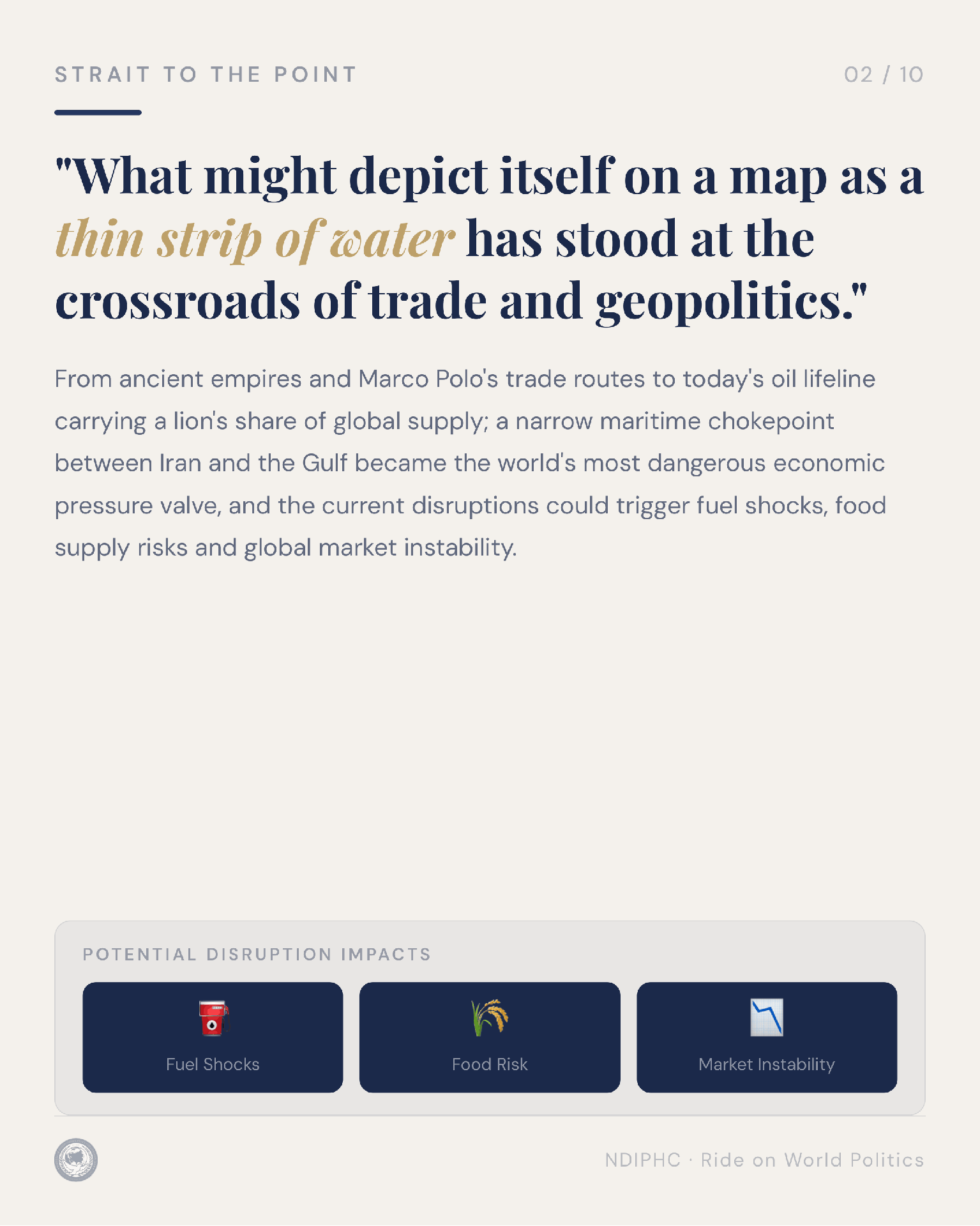
From ancient empires and Marco Polo's trade routes to today's oil lifeline carrying a lion's share of global supply; a narrow maritime chokepoint between Iran and the Gulf became the world's most dangerous economic pressure valve, and the current disruptions could trigger fuel shocks, food supply risks and global market instability.
What might depict itself on a map as a thin strip of water has stood at the crossroads of trade and geopolitics. As shipping disruptions rattle global markets, its historical role helps explain why developments in this corridor carry such far-reaching consequences.
| A NARROW PASSAGE WITH GLOBAL REACH
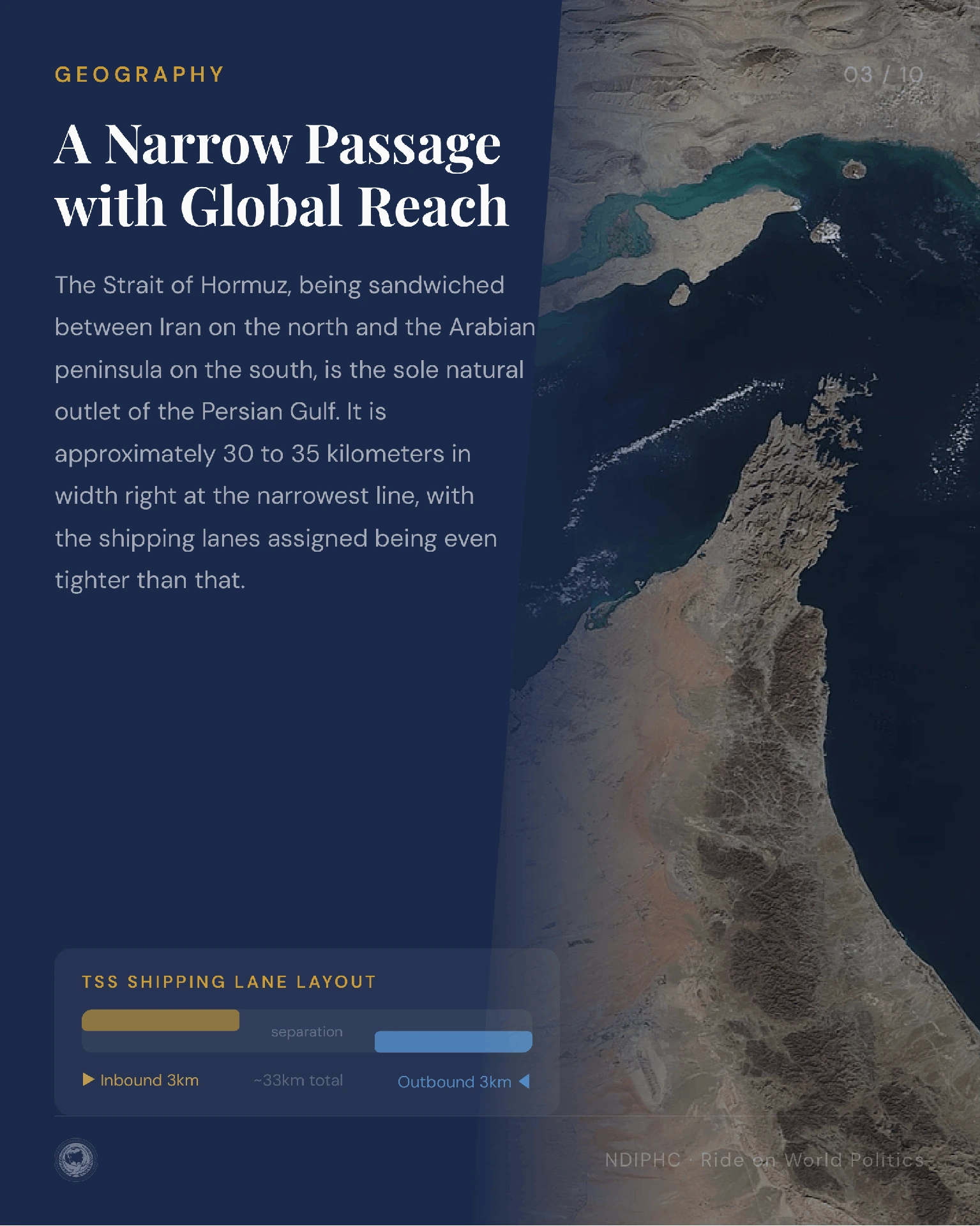
The Strait of Hormuz, being sandwiched between Iran on the north and the Arabian Peninsula on the south, is the sole natural outlet of the Persian Gulf. It is approximately 30 to 35 kilometres in width right at the narrowest line, with the shipping lanes assigned being even tighter than that. This geography has rendered it one of the most strategically sensitive chokepoints on the globe, where mastery of a small sea corridor may affect the movements of power, commodities and military resources throughout the world.
| THE LIFELINE OF THE GLOBAL ENERGY MARKET
In contemporary times, this strait has grown to be an equivalent of world energy security. Oil tankers leaving large oil producers have to cross through this route to access world markets. Any interference — be it military build-up, ship attacks or political actions — will have a swift trickle-down effect on the global economy, resulting in spikes in fuel prices and supply chain instability.
The strategic significance of the Strait of Hormuz has a much more ancient history than oil, gas and modern geopolitics. Its position as a bridge between regions is as old as the ancient civilisations of the Near East.
| THE MARITIME OIL EXPORT AND ITS INTERTWINING NATURE WITH THE GLOBAL ECONOMY
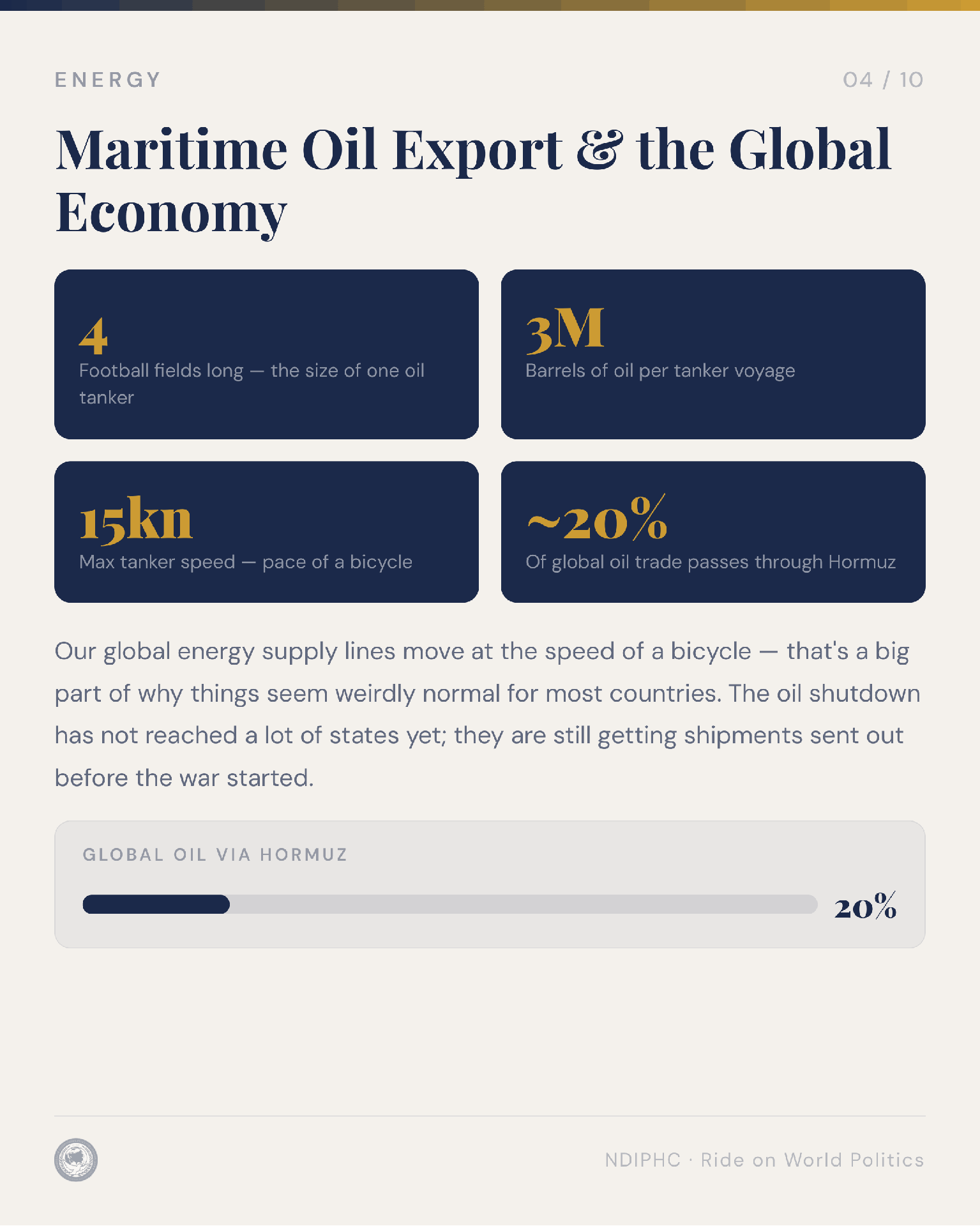
The thing to know about an oil tanker is that it's quite big — around four football fields long, carries 2 or 3 million barrels of oil, and weighs more than a skyscraper. All of which makes it travel slow: 10 or 15 knots, similar to the speed of a bicycle. Satirically, our global energy supply lines move at the speed of a bicycle.
This is a map of global oil flows put together by JP Morgan. The red lines show the oil coming out of the Middle East going out to the rest of the world — this is the route that has been cut off recently. Back in December, before the war, the oil was flowing freely. But remember, it moves at the speed of a bunch of bicycles.
So when a war starts and the oil stops flowing, there is actually still a significant amount out there taking its long, slow journey around the globe. That is a big part of why things seem weirdly normal for most countries — the oil shutdown has not yet reached many states. They are still receiving shipments that were sent out before the war started.
| THE CHOKEPOINT'S IMPORTANCE
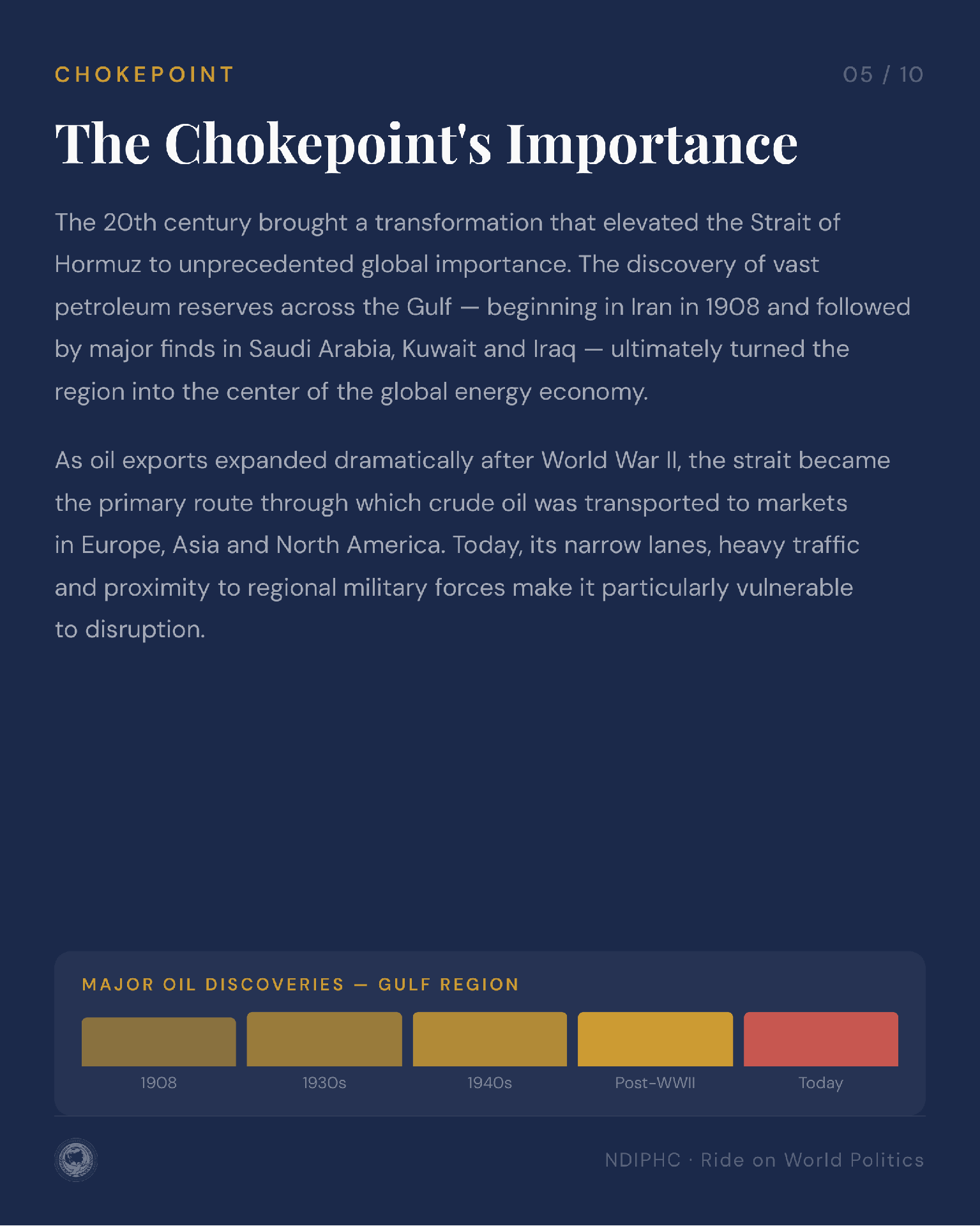
The 20th century brought a transformation that elevated the Strait of Hormuz to unprecedented global importance. The discovery of vast petroleum reserves across the Gulf — beginning in Iran in 1908 and followed by major finds in Saudi Arabia, Kuwait and Iraq — ultimately turned the region into the centre of the global energy economy.
As oil exports expanded dramatically after World War II, the strait became the primary route through which crude oil was transported to markets in Europe, Asia and North America. Its importance has only grown as global energy demand has increased.
Today, the Strait of Hormuz remains indispensable to the functioning of the global economy. Its narrow lanes, heavy traffic and proximity to regional military forces make it particularly vulnerable to disruption.
| A HISTORY OF TENSION AND SECURITY RISK
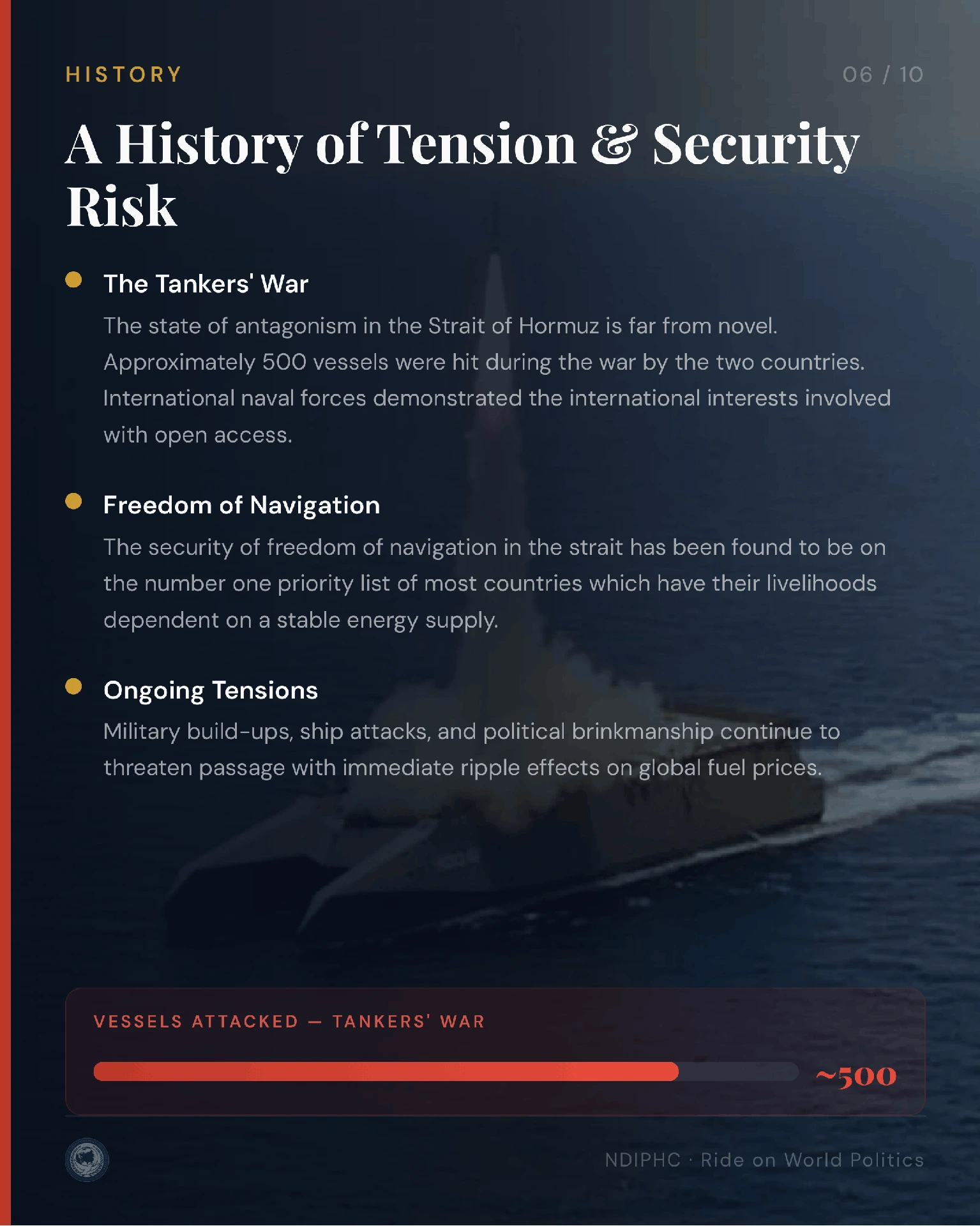
The state of antagonism in the Strait of Hormuz is far from being a novel chapter in history. The Tanker War was the first major conflict that shook the strait — approximately 500 vessels were hit during the war by the two warring countries.
International naval forces, including that of the United States and its allies, demonstrated the breadth of international interests involved in keeping this passage open. The security of freedom of navigation in the strait has consistently ranked as a top priority for most countries whose livelihoods depend on a stable energy supply.
| ECONOMIC IMPLICATIONS OF DISRUPTION
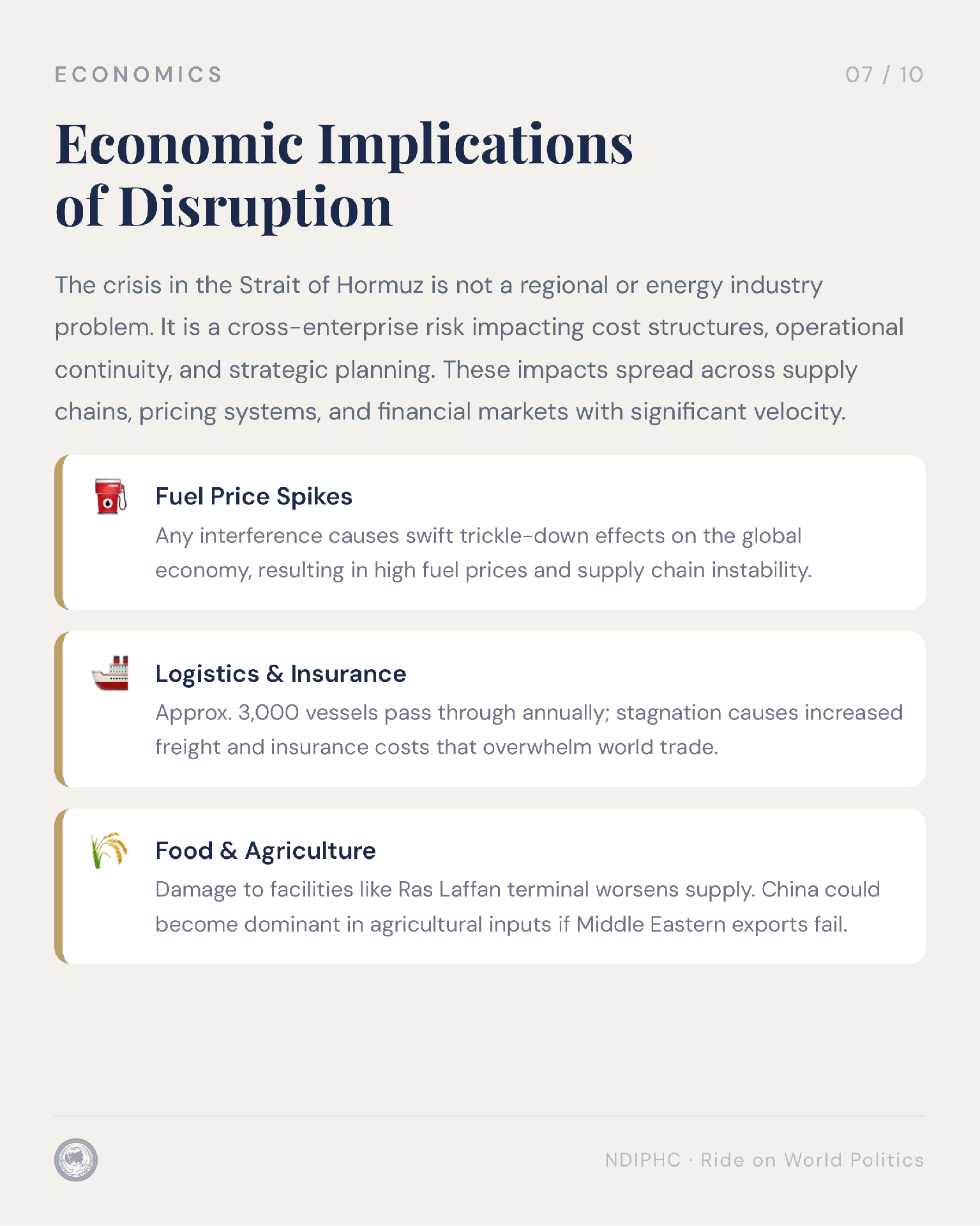
The crisis in the Strait of Hormuz is not merely a regional or energy industry problem — it is a cross-enterprise risk with far-reaching impact on cost structures, operational continuity and strategic planning. The strait has re-established itself as a focal point of pressure on the global economy, not necessarily due to its topography, but due to what passes through it. When disruption takes place, its impacts spread across supply chains, pricing systems and financial markets with significant velocity.
Approximately 3,000 shipping vessels usually pass through the strait, but current disruptions are causing the majority to stagnate, driving up logistics costs and freight insurance premiums that place an overwhelming burden on world trade — particularly in energy and household commodities. The fact that key facilities such as the Ras Laffan terminal in Qatar and Iranian oil infrastructure have been damaged only worsens the situation. The shift could prove favourable to Russia and China, with the latter potentially becoming a dominant supplier of agricultural inputs should Middle Eastern exports falter.
| STRATEGIC IMPORTANCE BEYOND ENERGY
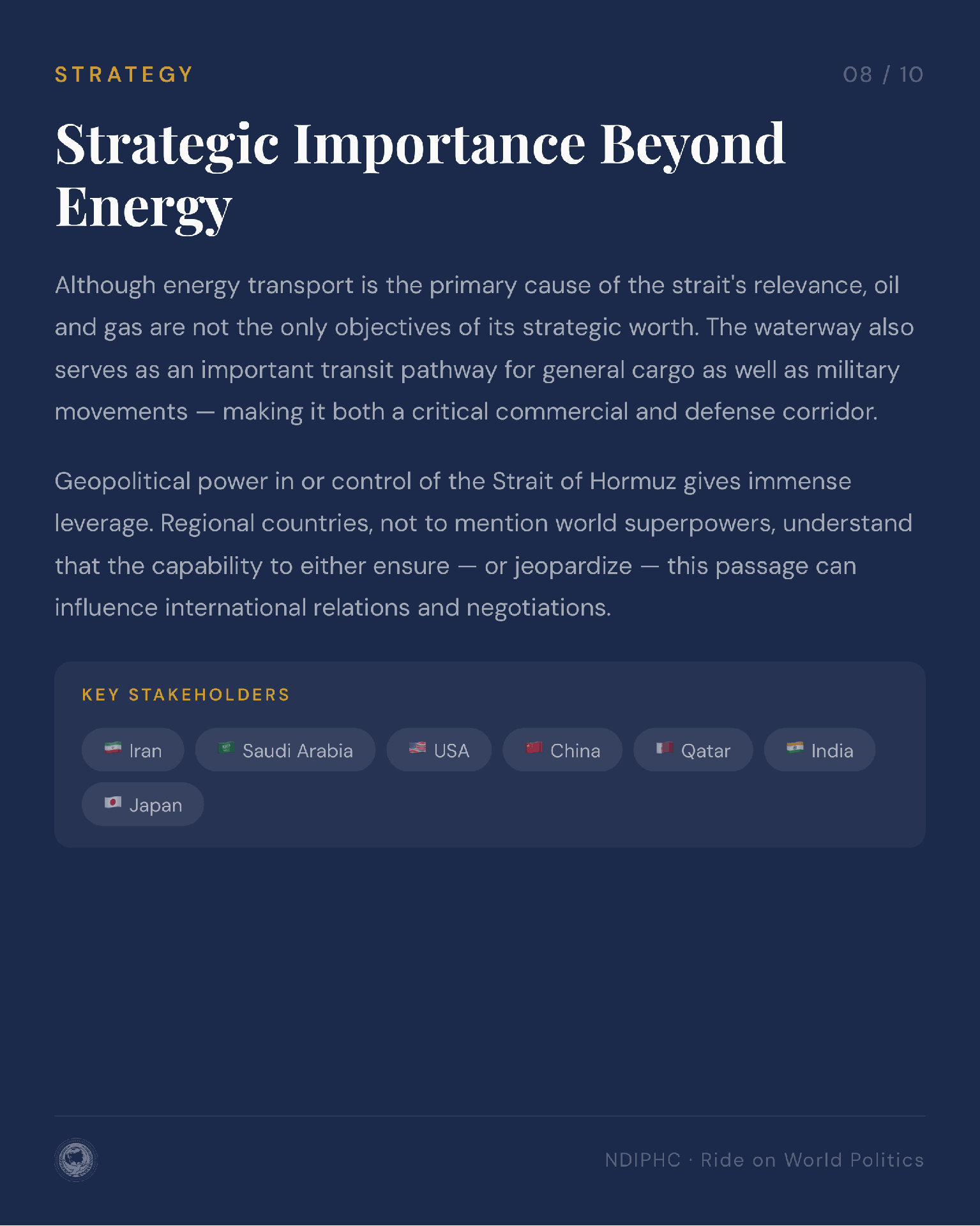
Although the transport of energy is the most prominent cause of the strait's relevance, oil and gas are not the only measure of its strategic worth. The waterway also serves as an important transit pathway for general cargo and military movements, making it both a critical commercial and defence corridor.
Control of the Strait of Hormuz confers immense geopolitical power. Regional countries and world superpowers alike understand that the capability to either ensure — or jeopardise — this passage can influence international relations and negotiations at the highest levels.
| THE TICKING OF THE CLOCK
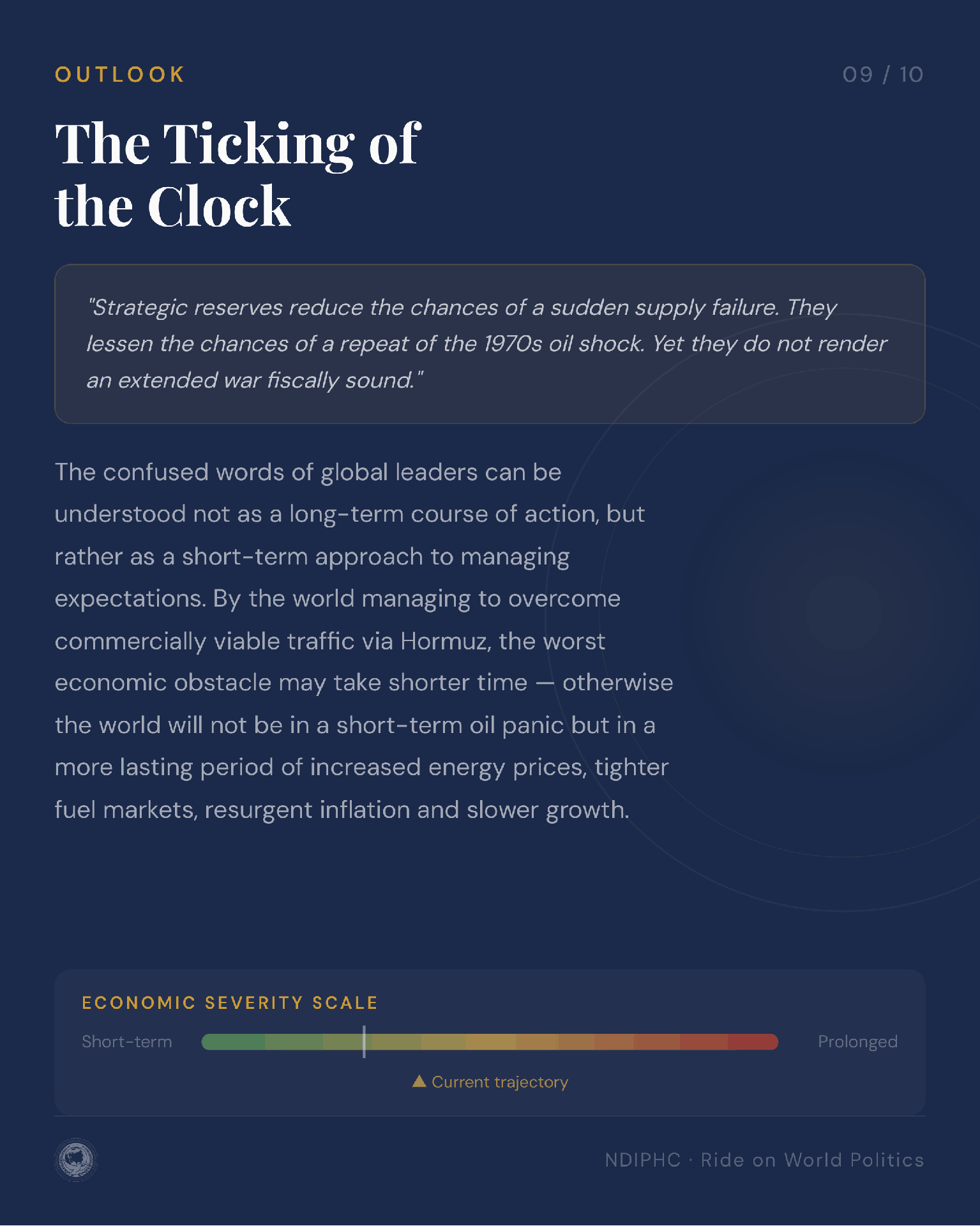
The broader implication is thus clear. Strategic reserves reduce the chances of a sudden, catastrophic supply failure and lessen the likelihood of a literal repeat of the 1970s oil shock. Yet they do not render an extended war fiscally sound. The measured words of global leaders can be most accurately understood not as signalling a long-term course of action, but as the implementation of a short-term approach to managing expectations and containing economic shock while military pressures continue to mount.
If the world manages to sustain commercially viable traffic through Hormuz, the worst economic consequences of the conflict may be short-lived. Otherwise, the world faces not a brief oil panic, but a more lasting period of elevated energy prices, tighter fuel markets, resurgent inflation and slower growth.
| THE ROLE OF THE STRAIT IN A CHANGING LANDSCAPE
Demand for energy imports — most of which traverse the strait — is fuelled by emerging economies in Asia. This guarantees that it will continue to function as a major chokepoint for the foreseeable future.
Simultaneously, the transition towards cleaner energy sources has the potential to alleviate the strategic pressure on the strait in the long run. Until that time, it will remain a centre of international interest and geopolitical calculation.
| CONCLUSION
The Strait of Hormuz is considered a global chokepoint because it combines three critical factors: geographic narrowness, massive energy throughput, and geopolitical sensitivity. Its role as the primary gateway for a significant share of the world's oil and gas exports makes it indispensable to the global economy.
Any disruption in this narrow passage has the potential to reverberate across the globe. This is not just a regional feature — it is a linchpin of global stability and a constant reminder of how interconnected the modern world has become.
Understanding its importance helps explain why this relatively small stretch of water continues to command such significant attention on the world stage.
Written by Azfar Zarif Khan | #12617063
Designed by Foysal Planck | #12617038